Apartment Balcony Safety: Essential Guidelines for High-Rise Living in India
Complete apartment balcony safety guide for Indian high-rises. Learn essential safety measures, regulations, and best practices for families.
High-rise living offers many benefits, but balcony safety requires serious attention. This comprehensive guide helps apartment residents ensure complete balcony safety.
The High-Rise Reality in India Urban India has seen explosive growth in high-rise apartments:
- Over 500 million Indians now live in apartments
- 40% of urban housing is in buildings above 5 floors
- Balcony accidents have increased with high-rise density
- Most accidents are preventable with proper safety measures
Understanding Balcony Risks
Primary Hazards:
- Falls - Leading cause of balcony injuries and fatalities
- Children at Risk - Curious exploration without understanding danger
- Pets - Can slip through gaps or jump unexpectedly
- Falling Objects - Items falling from height can be deadly
- Suicide/Self-Harm - Tragic but real concern requiring prevention
Statistics That Matter:
- 65% of childhood home falls occur from balconies
- Buildings above 5 floors account for 80% of fatal falls
- 90% of balcony falls are preventable with proper safety measures
- Children under 6 are highest risk group
Building Regulations and Standards
National Building Code (NBC):
- Balcony railing minimum height: 1050mm (3.5 feet)
- Maximum gap between railings: 110mm (4.3 inches)
- Structural strength requirements
- Materials and construction standards
However: Regulations are minimum standards. Additional safety measures essential, especially with children.
Many older buildings don't meet current standards. Retrofitting safety measures is resident responsibility.
Essential Safety Measures
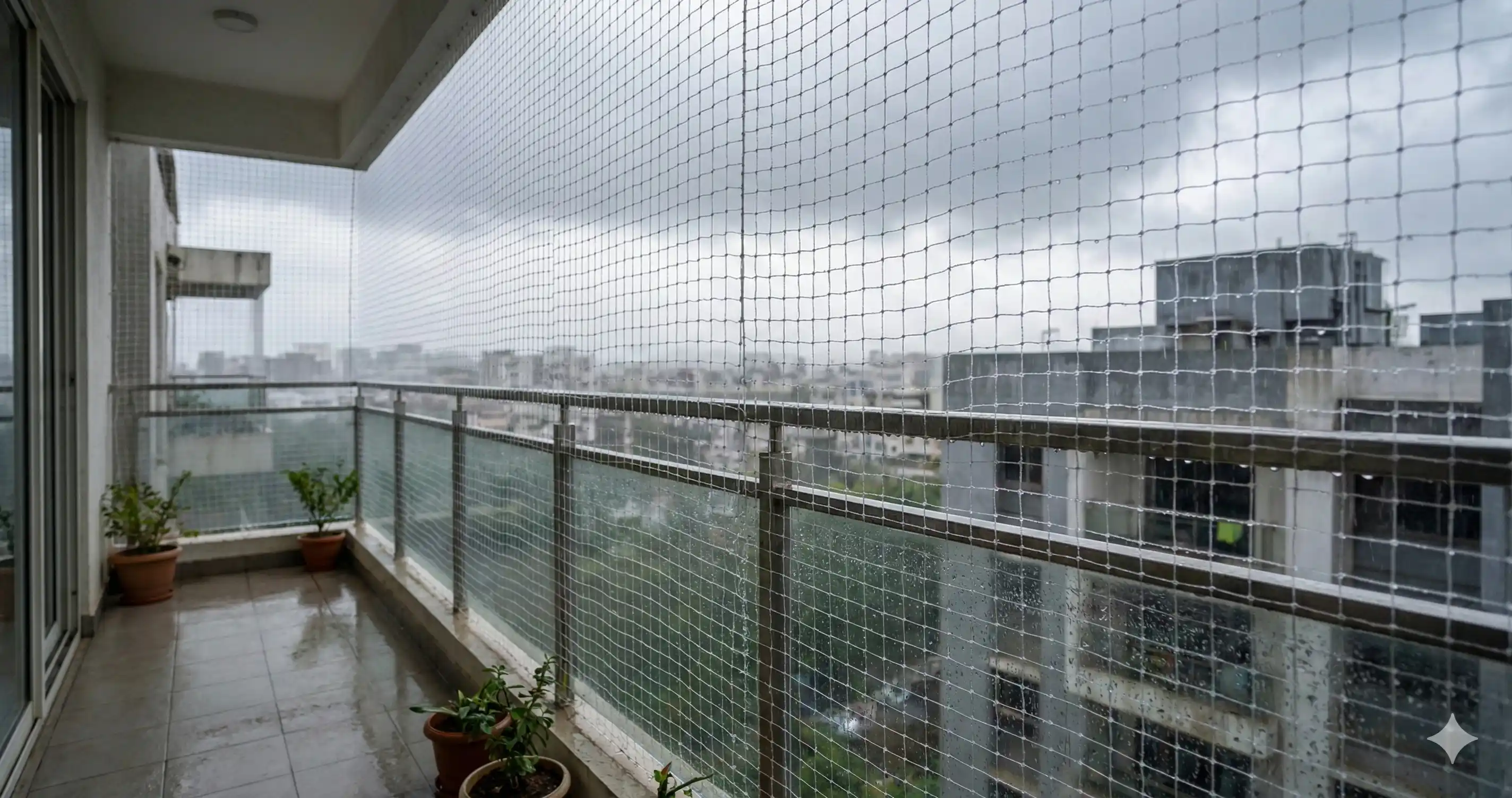
- Safety Nets (Primary Protection) The Single Most Important Safety Measure:
Why Safety Nets Are Essential: ✓ Physical barrier preventing falls ✓ Works even without supervision ✓ Allows balcony use without constant worry ✓ Protects children, pets, and objects ✓ Invisible from distance (doesn't affect aesthetics) ✓ Relatively affordable considering protection provided
Types of Safety Nets for Balconies:
- Children safety nets: 20-30mm mesh, high tensile strength
- Multi-purpose safety nets: 30-40mm mesh, UV-stabilized
- Transparent nets: Premium option, minimal visual impact
- Premium branded nets: Garware, Tuff Safe (higher quality, longer life)
Installation Considerations:
- Professional installation mandatory
- Complete coverage with no gaps
- Proper tensioning critical
- Stainless steel fittings for durability
- Regular inspection and maintenance
- Typical cost: ₹5,000-15,000 per balcony
Expected Lifespan: 5-7 years with quality nets and proper maintenance
- Invisible Grills (Premium Alternative) Modern Solution for Unobstructed Views:
Advantages: ✓ Nearly invisible from distance ✓ Maximum strength (150kg per cable) ✓ No maintenance (stainless steel doesn't rust) ✓ Long lifespan (15-20 years) ✓ Modern aesthetic ✓ Excellent for premium apartments
Considerations:
- Higher initial cost (₹10,000-25,000 per balcony)
- Professional installation essential
- Building approval may be needed
- Cannot be easily removed/relocated
Best For:
- Families wanting unobstructed views
- Premium apartments
- Long-term residents
- Modern architecture
- Those preferring minimal maintenance
- Window Restrictors and Locks Essential Secondary Measure:
Types:
- Cable restrictors: Allow partial opening only
- Locking mechanisms: Prevent children from opening
- Ventilation locks: Secure position for airflow
- Key-operated: Ultimate security
Where to Install: ✓ All windows accessible to children ✓ Windows near furniture that can be climbed ✓ Any window opening to balcony ✓ Windows in children's rooms
Cost: ₹500-2,000 per window Effectiveness: High for preventing window falls
- Furniture Arrangement Often Overlooked Safety Measure:
Safe Arrangement Principles:
- NO furniture near balcony railing
- Remove climbing aids (boxes, stools, planters)
- Secure heavy furniture to walls
- Consider furniture with rounded edges
- Avoid placing attractive items on railing
High-Risk Items to Relocate: ❌ Chairs or benches near railing ❌ Storage boxes children can climb ❌ Low tables providing step-up ❌ Planters on railing edges ❌ Toy storage accessible from railing
- Door Safety Devices Preventing Unauthorized Access:
Essential Devices:
- Childproof door locks (high position)
- Auto-closing door mechanisms
- Alarm systems for balcony doors
- Visual indicators when door is open
- Sliding door locks
Implementation:
- Install locks out of children's reach (above 5 feet)
- Ensure all family members understand operation
- Maintain mechanisms regularly
- Test frequently
- Have backup security methods
- Plant and Object Security Preventing Falling Objects:
Critical Actions: ✓ Secure all planters firmly ✓ No items on railings ✓ Weather-proof all outdoor items ✓ Regular inspection for stability ✓ Consider liability for falling objects
Legal Liability: You are responsible if objects from your balcony injure someone below. Secure everything or face:
- Criminal charges
- Civil liability
- Compensation costs
- Legal expenses
Age-Specific Safety Strategies
Families with Infants (0-12 months):
- Install safety barriers before baby becomes mobile
- Never place baby equipment on balcony
- Keep balcony door locked always
- No supervised balcony time yet (wind, sun risks)
Toddlers (1-3 years):
- Safety nets mandatory
- Never leave unsupervised
- Remove all climbing aids
- Begin teaching danger concept
- Multiple backup safety measures
Preschoolers (3-6 years):
- Continue all physical barriers
- Safety education begins
- Supervised balcony time with rules
- Teach to never climb or lean over
- Regular reinforcement of safety rules
School Age (6-12 years):
- Maintain physical barriers (children can be impulsive)
- More independence with strict rules
- Understanding of height danger
- Responsibility training
- Continue supervision
Teenagers:
- Physical barriers still recommended
- Focus on judgment and decision-making
- Discuss risks including peer pressure
- Address mental health openly
- Ensure emergency contact protocols
Pet Safety on Balconies
Dogs:
- Safety nets essential (even for large dogs)
- Never leave unsupervised
- Secure any gaps they can squeeze through
- Consider their jumping ability
- Summer heat precautions
Cats:
- Common myth: Cats always land safely (FALSE)
- High-rise syndrome: Cats do fall from balconies
- Safety nets mandatory
- Secure all gaps (cats are flexible)
- Watch for birds/insects attracting attention
Society and Building Guidelines
Understanding Your Building Rules:
Common Apartment Society Regulations:
- Specific safety net color requirements (usually white)
- Installation method specifications
- Approval process for modifications
- Aesthetic consistency requirements
- Contractor approval needs
Before Installing Safety Measures:
- Review society bylaws
- Get necessary approvals
- Inform building management
- Use approved contractors
- Share installation plans with neighbors
- Follow aesthetic guidelines
Working with Society Management:
- Request group discount for multiple apartments
- Organize building-wide safety initiative
- Share contractor recommendations
- Collective bargaining for better prices
- Build community awareness
Tenant vs Owner Responsibilities
For Tenants:
- Discuss safety concerns with landlord
- Request permission for safety installations
- Offer to pay for removable solutions
- Document property condition before/after
- Understand lease modification clauses
- Temporary solutions if permanent denied
For Landlords:
- Legal responsibility for basic safety standards
- Consider safety installations as property improvement
- Increases property value and appeal
- Reduces liability
- Attracts responsible tenants
- May be legally required
Balcony Type-Specific Safety
Small Balconies (Under 50 sq.ft):
- Complete coverage easier
- Lower cost for safety measures
- Less furniture = fewer climbing aids
- Still requires full protection
Medium Balconies (50-150 sq.ft):
- Popular size for 2-3 BHK apartments
- Budget ₹7,000-12,000 for safety nets
- Careful furniture arrangement critical
- May need multiple safety zones
Large Balconies/Terraces (150+ sq.ft):
- Comprehensive safety planning needed
- Higher investment (₹15,000-30,000)
- Multiple access points to secure
- Consider professional safety assessment
Open Terraces:
- Typically on top floors
- Require perimeter protection
- Higher wind loads
- May need building permission
- Professional installation essential
Juliet Balconies:
- Very small, decorative balconies
- Still need protection if door can open fully
- Window restrictors may suffice
- Check if net installation feasible
Maintenance and Inspection
Monthly Checklist: ☑ Inspect safety nets for damage ☑ Check all attachment points ☑ Test door locks and restrictors ☑ Verify furniture hasn't shifted ☑ Remove accumulated debris ☑ Check for new hazards ☑ Ensure children haven't modified anything
Quarterly Actions: ☑ Professional net inspection ☑ Deep cleaning of safety installations ☑ Update safety plan if family needs change ☑ Review and reinforce rules with children ☑ Check for wear and tear ☑ Plan for seasonal weather impacts
Annually: ☑ Comprehensive safety audit ☑ Professional maintenance of all systems ☑ Replace worn components ☑ Reassess needs as children grow ☑ Update emergency plans ☑ Review and update society approvals if needed
Emergency Preparedness
Essential Preparations:
- Emergency contact list visible
- First aid kit accessible
- Fire extinguisher on balcony/nearby
- Evacuation plan practiced
- Neighbor emergency contacts
- Building security numbers handy
Emergency Scenarios to Prepare For:
- Child trapped outside balcony
- Someone fallen and injured
- Fire requiring balcony evacuation
- Earthquake (balcony structural concern)
- Extreme weather damage
Teach Children:
- Emergency phone numbers
- How to call for help
- Never panic in emergency
- Basic first aid awareness
- Building evacuation procedures
Cost-Benefit Analysis
Investment in Safety: Basic Safety Setup (Small Balcony):
- Safety nets: ₹5,000-8,000
- Window locks: ₹1,000-2,000
- Door safety devices: ₹1,000-1,500
- Corner guards and minor items: ₹1,000-2,000 Total: ₹8,000-13,500
Premium Safety Setup:
- Invisible grills: ₹12,000-20,000
- Complete window security: ₹3,000-5,000
- Advanced door systems: ₹2,000-3,000
- Professional assessment: ₹2,000-5,000 Total: ₹19,000-33,000
Value Received:
- Peace of mind: Priceless
- Child safety: Priceless
- Property value increase: ₹20,000-50,000
- Liability protection: Potentially millions saved
- Quality of life: Immeasurable
Regional Considerations
Hyderabad Apartments:
- High-rise density in Hitech City, Gachibowli
- Typical cost: ₹6,000-12,000 per balcony
- Many society-wide safety initiatives
- Good availability of quality services
Bangalore High-Rises:
- Regulations increasingly stringent
- Premium pricing: ₹8,000-15,000
- Aesthetic considerations important
- Well-developed safety services market
Vijayawada:
- Growing high-rise development
- Competitive pricing: ₹5,000-10,000
- Increasing safety awareness
- Good local service providers
Visakhapatnam:
- Coastal considerations (rust-resistant materials essential)
- Wind load concerns for high-rises
- Price range: ₹6,000-12,000
- Growing market for safety solutions
Expert Recommendations
Universal Best Practices:
- Install safety nets before considering balcony use safe
- Never rely solely on supervision
- Invest in quality over cheap alternatives
- Professional installation non-negotiable
- Regular maintenance prevents failures
- Education + physical barriers = complete safety
- Plan for long-term, not just current needs
Getting Professional Help
Satya Safety Nets Offers:
- Free balcony safety assessment
- Quality certified safety nets
- Invisible grill solutions
- Professional installation
- Society approval assistance
- Maintenance services
- Emergency repair services
- Service across Vijayawada, Visakhapatnam, Hyderabad, Bangalore
Schedule a free consultation to ensure your balcony is completely safe for your family.
Remember: Balcony safety is not optional. Every high-rise family must take proactive measures. The cost of safety is minimal compared to the priceless protection it provides.