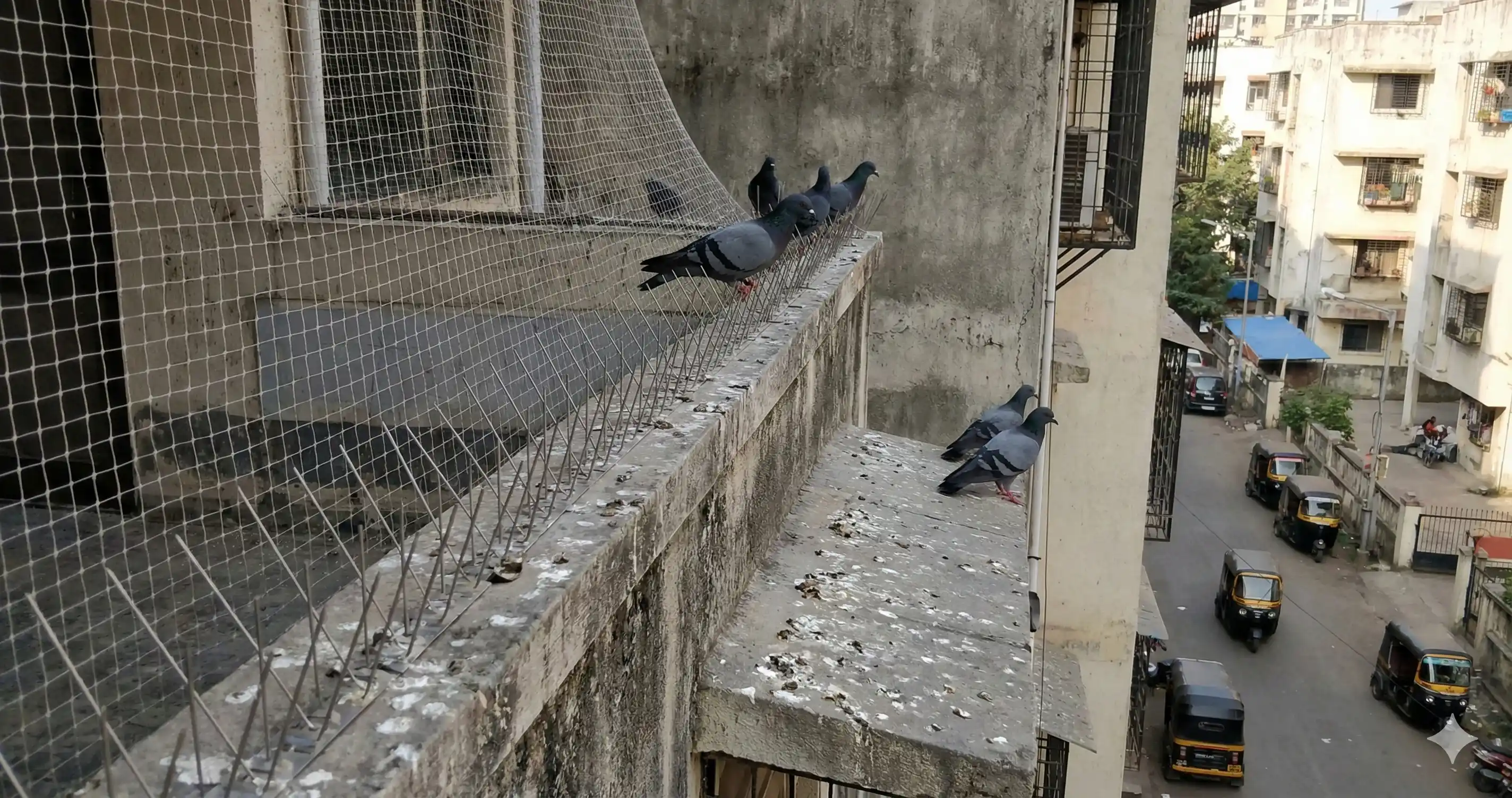
Bird Netting for Buildings: Complete Installation and Maintenance Guide
Professional guide to bird netting installation and maintenance. Protect your building from bird infestation with expert tips and solutions.
Bird infestation is a growing problem in urban areas, causing health hazards and property damage. Professional bird netting is the most effective long-term solution.
Why Bird Netting is Essential Birds can create serious problems for building owners:
- Health hazards from droppings and parasites
- Property damage from acidic droppings
- Noise pollution
- Blocked drainage systems
- Fire hazards from nesting materials
- Negative impact on building aesthetics
Types of Bird Netting
-
HDPE Bird Nets: High-density polyethylene nets are UV-stabilized, lightweight, and durable. Ideal for most residential and commercial applications.
-
Nylon Bird Nets: Strong and flexible, suitable for larger areas. More expensive but highly durable.
-
Anti-Bird Nets: Specialized nets with smaller mesh sizes for preventing smaller birds like sparrows.
Choosing the Right Mesh Size
- 25mm mesh: For smaller birds (sparrows, mynas)
- 50mm mesh: For medium birds (pigeons, crows)
- 75mm mesh: For larger birds only
Professional Installation Process
-
Site Assessment: Evaluate the area, identify bird species, and determine netting requirements.
-
Measurements: Precise measurements ensure complete coverage without gaps.
-
Framework Installation: Install stainless steel hooks and supports at strategic points.
-
Net Fixing: Stretch and secure nets with proper tension to prevent sagging.
-
Sealing Gaps: Ensure all potential entry points are covered.
-
Quality Check: Inspect for proper tensioning and coverage.
Installation Best Practices
- Use UV-resistant materials for longer life
- Ensure 100% coverage without gaps
- Install during dry weather for better results
- Use stainless steel fittings to prevent rust
- Maintain adequate tension to prevent bird landings
Common Mistakes to Avoid
- Using low-quality nets that deteriorate quickly
- Leaving gaps that birds can exploit
- Improper tensioning causing sagging
- Using unsuitable mesh sizes
- DIY installation without expertise
Maintenance Requirements Monthly: Visual inspection for damage or sagging Quarterly: Remove accumulated debris Annually: Professional inspection and repairs As Needed: Repair tears or damage immediately
Expected Lifespan Quality bird nets with professional installation typically last:
- HDPE nets: 5-7 years
- Nylon nets: 7-10 years
- UV-stabilized nets: Up to 10 years in harsh conditions
Cost Factors Bird netting costs depend on:
- Area coverage
- Net quality and material
- Mesh size
- Building height
- Access difficulty
- Labor costs
Benefits of Professional Installation
- Expert assessment of requirements
- Quality materials and fittings
- Proper tensioning and coverage
- Warranty on installation
- Safety compliance
- Long-lasting results
Areas Requiring Bird Netting
- Balconies and terraces
- Building facades
- Ventilation shafts
- Warehouse openings
- Stadium roofing
- Agricultural storage
- Solar panel arrays
Bird Netting Regulations Check local building codes and society regulations before installation. Some areas have specific requirements for color and visibility.
Why Choose Satya Safety Nets? We offer professional bird netting services in Vijayawada, Visakhapatnam, Hyderabad, and Bangalore with:
- Premium quality UV-stabilized nets
- Experienced installation teams
- Competitive pricing
- 5-year warranty
- Free site inspection
Get Your Free Quote Contact us today for a free site assessment and customized bird netting solution.