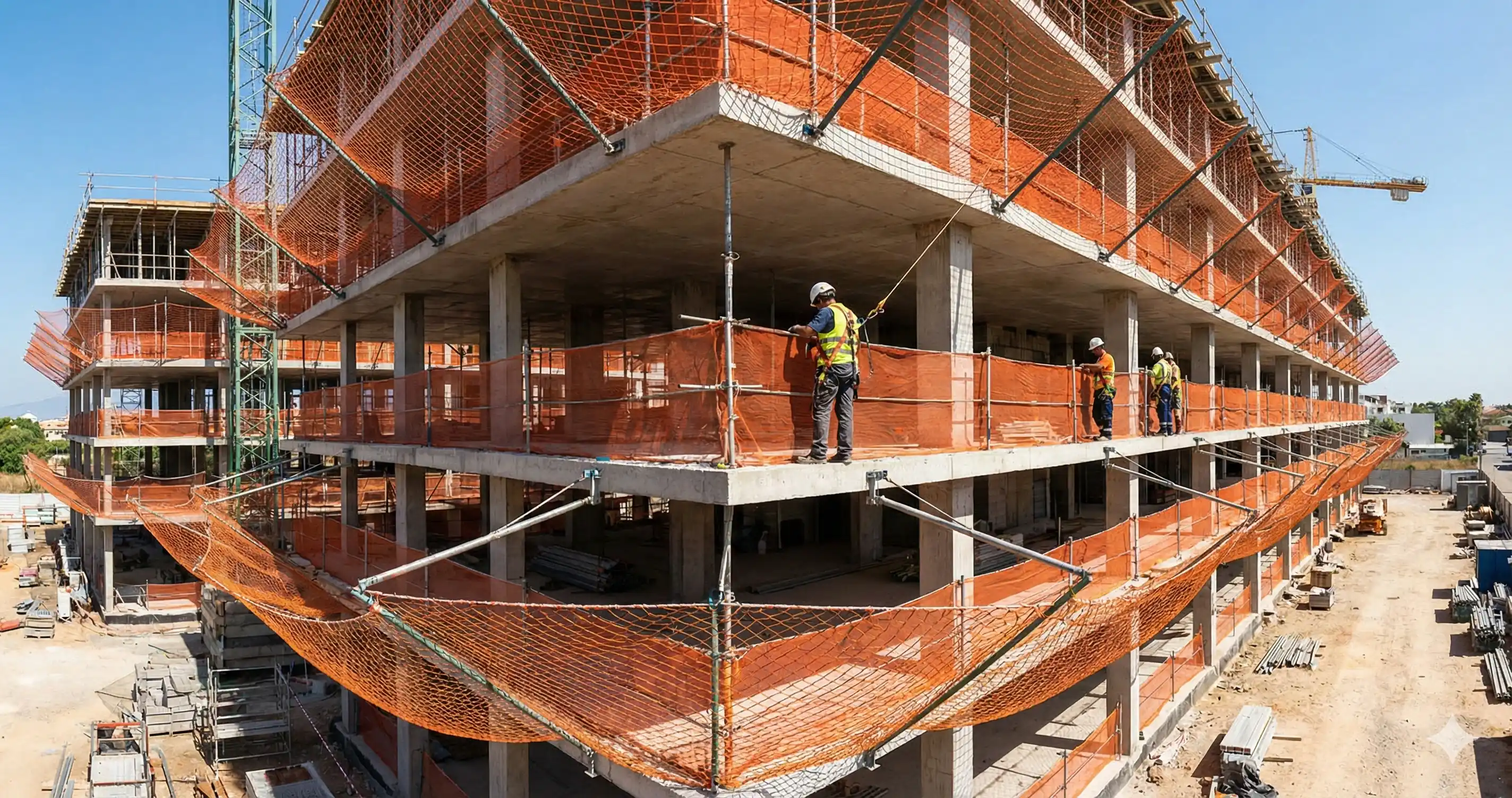
Safety Nets for Construction Sites: Comprehensive Worker Protection Guide
Essential guide to construction safety nets. Learn about types, regulations, installation standards, and how to ensure complete worker safety.
Construction safety nets are critical for protecting workers from fall hazards. This comprehensive guide covers regulations, types, and best practices for construction site safety.
Construction Site Fall Statistics Falls are the leading cause of construction worker fatalities in India. According to safety reports:
- 60% of construction accidents involve falls
- Falls from heights above 10 feet often result in severe injuries
- Proper safety net installation reduces fall-related injuries by 90%
- Compliance with safety standards is both legal requirement and moral obligation
Legal Requirements in India
Factories Act 1948:
- Mandatory safety measures for construction sites
- Specific provisions for working at heights
- Regular inspections required
- Penalties for non-compliance
Building and Other Construction Workers Act 1996:
- Safety net requirements for multi-story construction
- Minimum safety standards
- Worker protection mandates
- Site safety officer requirements
Types of Construction Safety Nets
-
Debris Nets Purpose: Catch falling materials and debris Material: Heavy-duty HDPE or nylon Mesh Size: 50mm-100mm Typical Use: Building exteriors, scaffolding Load Capacity: 200-300 kg/sq.m Cost: ₹15-30 per sq.ft
-
Personnel Safety Nets Purpose: Catch falling workers Material: High-tensile nylon Mesh Size: 100mm (4 inches maximum) Typical Use: Horizontal installation below work areas Load Capacity: 400-800 kg impact load Cost: ₹50-100 per sq.ft Testing: Must meet IS:4855 standards
-
Vertical Safety Nets Purpose: Protect from edge falls Material: Heavy-duty nylon or HDPE Installation: Vertical barriers at building edges Height: Minimum 1 meter above working surface Cost: ₹30-60 per sq.ft
-
Scaffold Safety Nets Purpose: Protect workers on scaffolding Material: Flame-retardant treated Attachment: Secured to scaffolding framework Standards: Must comply with IS:3696 Cost: ₹40-70 per sq.ft
Safety Net Specifications
Material Requirements:
- Virgin HDPE or Nylon (no recycled material)
- UV-stabilized for outdoor use
- Minimum tensile strength as per IS:4855
- Flame retardant treatment
- Color: High visibility (orange, yellow, green)
Mesh Specifications:
- Maximum 100mm for personnel safety nets
- Consistent mesh size throughout
- Knotted or knotless construction
- Double stitched borders
- Reinforced edges
Border Specifications:
- Minimum 10mm diameter rope border
- Reinforcement at corners
- Attachment points every 500mm
- Steel cable reinforcement for large installations
Installation Standards
Height Requirements:
- Maximum 7.5 meters between net and work surface
- Minimum 2.5 meters horizontal extension from edge
- Adequate clearance below net (minimum 7 meters)
Testing Before Use:
- Drop test with 160kg sandbag
- Visual inspection of entire net
- Test every attachment point
- Document test results
- Retest after any impact or every 6 months
Installation Process:
- Site assessment and planning
- Install support structure (steel framework)
- Stretch net with proper tension
- Secure all attachment points
- Conduct drop test
- Visual inspection and sign-off
- Regular monitoring
Support Structure Requirements:
- Steel framework capable of withstanding impact loads
- Proper anchoring to building structure
- Rust-resistant materials or treatment
- Professional engineering design
- Load calculation documentation
Safety Factors:
- Minimum safety factor: 2:1 for personnel nets
- Higher safety factor for debris nets (2.5:1)
- Account for environmental loads (wind, rain)
- Regular structural inspection
Site-Specific Safety Planning
High-Rise Construction:
- Multiple levels of safety nets
- Vertical and horizontal protection
- Regular repositioning as construction progresses
- Enhanced edge protection
- Additional personal fall arrest systems
Bridge Construction:
- Specialized bridge nets
- Accounting for water bodies below
- Wind load considerations
- Extended horizontal reach
- Boat access for rescue if needed
Renovation Work:
- Smaller, targeted installations
- Integration with existing structures
- Public safety considerations
- Debris containment priority
- Limited access challenges
Interior Construction:
- Atrium safety nets
- Stairwell protection
- Temporary floor opening coverage
- Lighter weight systems acceptable
- Aesthetic considerations for visible areas
Inspection and Maintenance
Daily Inspections (Site Supervisor): ☑ Visual check for damage ☑ Verify all attachment points secure ☑ Check for debris accumulation ☑ Look for unauthorized modifications ☑ Ensure adequate clearance maintained
Weekly Inspections (Safety Officer): ☑ Detailed inspection of entire net ☑ Check border ropes and reinforcements ☑ Test random attachment points ☑ Document condition ☑ Clean debris ☑ Check support structure
Monthly Inspections (Competent Person): ☑ Comprehensive structural assessment ☑ Measure net strength degradation ☑ Review installation compliance ☑ Update safety documentation ☑ Retension if needed ☑ Replace if showing significant wear
After Any Impact:
- Immediate removal from service
- Thorough inspection by qualified person
- Drop test before returning to service
- Document incident
- Investigate cause
- Retrain workers if needed
Replacement Criteria
Replace Safety Net If: ❌ Visible tears or holes larger than 50mm ❌ Broken border ropes ❌ UV degradation (brittleness, discoloration) ❌ Failed drop test ❌ Excessive wear (thinning of materials) ❌ Chemical damage ❌ Age exceeds manufacturer recommendations (typically 3-5 years) ❌ Major impact occurred
Worker Training Requirements
All Workers Must Know:
- Purpose and limitations of safety nets
- Not a substitute for fall prevention
- Proper work practices near edges
- Reporting damage immediately
- Emergency procedures
- Personal fall arrest system use
- Never intentionally fall into nets
Safety Officer Training:
- Net selection and specification
- Installation supervision
- Inspection procedures
- Documentation requirements
- Regulatory compliance
- Incident investigation
- Corrective action implementation
Installation Team Certification:
- Proper installation techniques
- Load calculations
- Testing procedures
- Structural requirements
- Safety standards
- Use of tools and equipment
- Working at heights safely
Common Mistakes to Avoid
❌ Inadequate Horizontal Extension Minimum 2.5 meters extension from furthest work point required.
❌ Excessive Height Never more than 7.5 meters between work surface and net.
❌ Insufficient Clearance Below Must have adequate space below net to safely arrest falls.
❌ Poor Attachment All attachment points must be secure and tested.
❌ Using Damaged Nets Never use nets showing any signs of deterioration.
❌ Neglecting Inspections Regular, documented inspections are mandatory.
❌ Improper Materials Only use nets meeting relevant IS standards.
Cost Analysis
Small Construction Site (500 sq.m):
- Material cost: ₹1,00,000-2,00,000
- Installation: ₹50,000-1,00,000
- Support structure: ₹75,000-1,50,000
- Testing and certification: ₹25,000-50,000
- Total: ₹2,50,000-5,00,000
Medium Site (2000 sq.m):
- Material cost: ₹4,00,000-8,00,000
- Installation: ₹2,00,000-3,50,000
- Support structure: ₹3,00,000-5,00,000
- Testing and certification: ₹50,000-1,00,000
- Total: ₹9,50,000-17,50,000
Large High-Rise Project:
- Material cost: ₹15,00,000-30,00,000
- Installation: ₹7,50,000-15,00,000
- Support structure: ₹12,00,000-25,00,000
- Testing and certification: ₹2,00,000-4,00,000
- Total: ₹36,50,000-74,00,000
ROI Consideration:
- Cost of one serious fall injury: ₹10,00,000-50,00,000
- Legal penalties for non-compliance: ₹5,00,000-25,00,000
- Project delays from accidents: Immeasurable
- Worker morale and productivity: Significantly improved with proper safety
- Safety net investment: Pays for itself many times over
Regulatory Compliance
Required Documentation:
- Safety plan including net specifications
- Installation drawings and calculations
- Material test certificates
- Drop test results
- Inspection logs
- Training records
- Incident reports
- Maintenance records
Government Inspections:
- Labour department site visits
- Safety compliance checks
- Penalty for violations
- Project stop work orders possible
- Legal liability for contractors
Insurance Requirements:
- Many insurers require safety nets
- Premium reductions for good safety records
- Claim denials possible without proper safety measures
- Documented compliance protects against liability
Selecting a Safety Net Provider
Essential Criteria: ✓ Supplies nets meeting IS:4855 and IS:3696 ✓ Provides material test certificates ✓ Experienced installation teams ✓ Proper safety training and equipment ✓ Conducts required testing ✓ Offers maintenance services ✓ Provides documentation ✓ Has good safety record ✓ Offers warranty ✓ Adequate insurance coverage
Questions to Ask:
- What standards do your nets meet?
- Can you provide material certificates?
- What is your installation process?
- How do you conduct drop tests?
- What inspection and maintenance do you offer?
- What is your safety record?
- Can you provide references?
- What warranty do you offer?
- What is your emergency response time?
Innovations in Construction Safety Nets
Modern Developments:
- High-visibility colored nets for better awareness
- Lighter materials with equal strength
- Modular systems for easy repositioning
- Integrated sensors for impact detection
- Weather-resistant coatings extending lifespan
- Improved attachment systems for faster installation
Future Trends:
- Smart nets with load monitoring
- Solar-powered impact alert systems
- Augmented reality for inspection
- Drone-assisted installation verification
- Materials with longer lifespan
Regional Availability
Hyderabad:
- Multiple certified suppliers
- Competitive pricing
- Quick installation services
- Cost: ₹40-80 per sq.ft for personnel safety nets
Bangalore:
- Good availability
- Strict regulatory environment
- Premium pricing
- Cost: ₹50-90 per sq.ft
Vijayawada & Visakhapatnam:
- Growing availability
- Moderate pricing
- Regional suppliers available
- Cost: ₹35-70 per sq.ft
Professional Construction Safety Services
Satya Safety Nets offers comprehensive construction safety solutions:
- IS:4855 certified safety nets
- Experienced installation teams
- Complete testing and certification
- Ongoing inspection and maintenance
- Training for site personnel
- Regulatory compliance assistance
- Emergency response services
- Service across Vijayawada, Visakhapatnam, Hyderabad, Bangalore
Construction safety is not just regulatory compliance—it's a commitment to protecting every worker's life. Invest in proper safety nets and ensure everyone goes home safe every day.
Contact us for professional construction safety net solutions tailored to your project requirements.