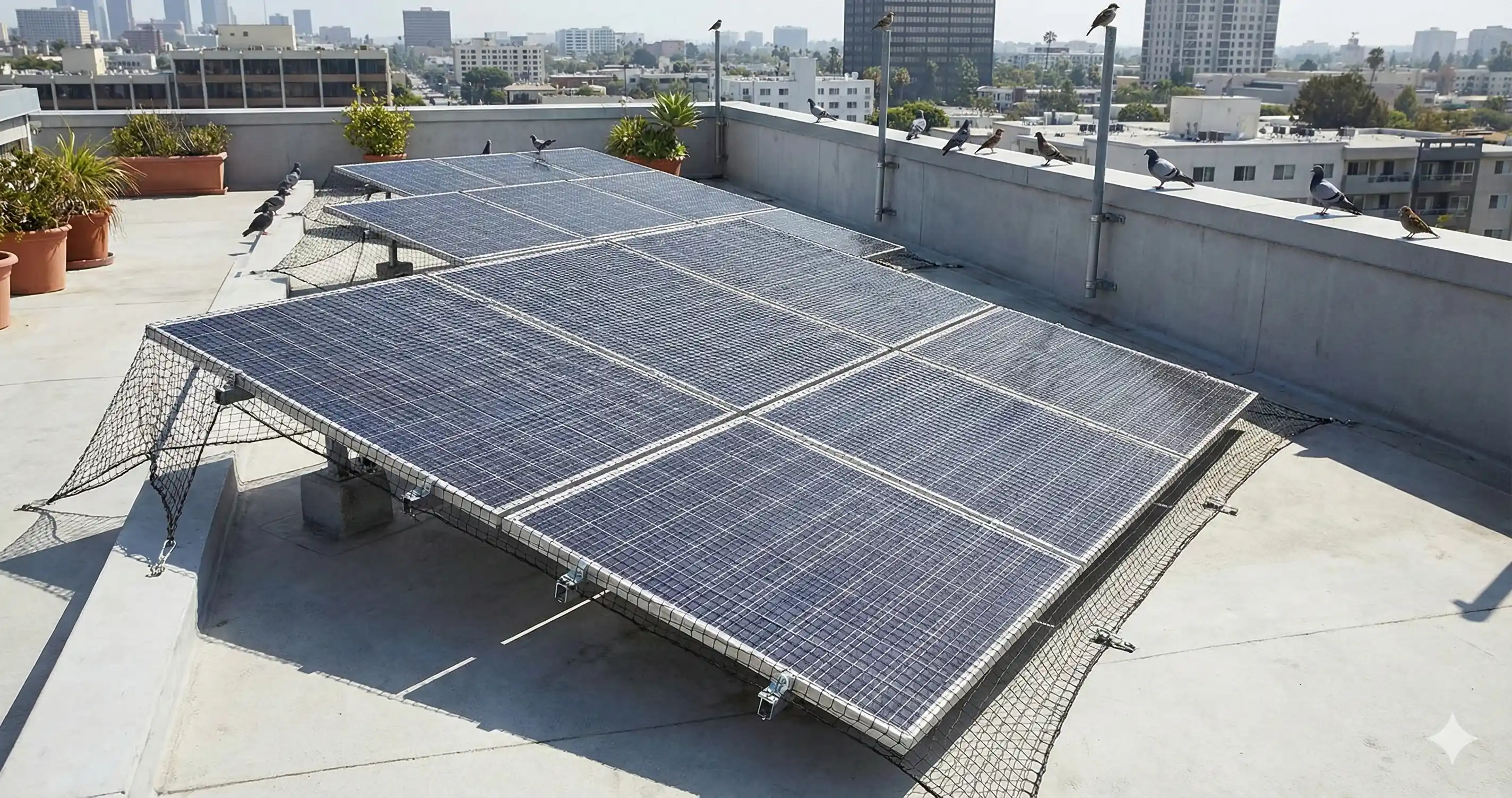
Solar Panel Protection with Bird Netting: Complete Installation Guide
Protect your solar investment from birds. Learn how bird netting prevents damage, improves efficiency, and extends solar panel lifespan.
Solar panels are expensive investments that require protection from birds. This comprehensive guide explains how bird netting safeguards your solar installation while maintaining efficiency.
The Solar Panel and Bird Problem
Why Birds Target Solar Panels:
- Warm surface attracts roosting
- Shelter from weather elements
- Protected nesting space underneath
- Height provides safety from predators
- Structural framework ideal for perching
Bird-Related Solar Panel Damage:
- Efficiency Loss
- Droppings reduce light absorption
- Efficiency can drop 15-30% with bird waste
- Nesting materials create shade
- Reduced output equals lost revenue/savings
- Physical Damage
- Droppings corrode panel coatings
- Scratching from claws damages surface
- Nesting materials trap moisture
- Wiring chewed by birds
- Inverter damage from nesting debris
- Structural Issues
- Weight of accumulated debris
- Water pooling from blocked drainage
- Accelerated weathering
- Mounting damage from pecking
- Safety Hazards
- Fire risk from dried nesting materials
- Electrical shorts from moisture
- Parasites spreading to building
- Disease transmission
Financial Impact:
- Cleaning costs: ₹5,000-20,000 annually
- Efficiency loss: ₹10,000-50,000 annually (for residential system)
- Repair costs: ₹25,000-2,00,000 if damage occurs
- Reduced panel lifespan: Potentially years of production lost
Bird Netting: The Optimal Solution
Why Bird Netting is Superior:
vs. Bird Spikes: ✓ Complete coverage (spikes leave gaps) ✓ Prevents access underneath panels ✓ Doesn't damage roof warranty ✓ Better aesthetics ✓ More humane
vs. Ultrasonic Deterrents: ✓ Doesn't require power ✓ 100% effectiveness (not habituation) ✓ No maintenance ✓ One-time installation ✓ Weatherproof
vs. Chemical Repellents: ✓ Long-lasting (5-10 years vs frequent reapplication) ✓ No toxic chemicals ✓ No environmental concerns ✓ Cost-effective long-term ✓ No damage to panels
Types of Bird Netting for Solar Panels
-
Standard HDPE Bird Netting Material: High-density polyethylene Mesh Size: 25mm-50mm UV Protection: Yes Lifespan: 5-7 years Cost: ₹30-50 per linear meter Best For: Residential installations, moderate bird pressure
-
Premium Nylon Bird Netting Material: UV-stabilized nylon Mesh Size: 25mm-50mm UV Protection: Enhanced Lifespan: 7-10 years Cost: ₹50-80 per linear meter Best For: Commercial installations, high bird density areas
-
Stainless Steel Bird Mesh Material: Marine-grade stainless steel Mesh Size: 20mm-40mm UV Protection: Not needed (metal) Lifespan: 15-20 years Cost: ₹150-250 per linear meter Best For: Premium installations, coastal areas, permanent solution
Mesh Size Selection:
For Pigeons and Crows: 50mm sufficient For Sparrows and Smaller Birds: 25mm recommended For Comprehensive Protection: 20-25mm ideal For Large Birds Only: 50-75mm acceptable
Installation Methods
- Perimeter Installation (Most Common) Attaches netting around solar array perimeter, creating barrier underneath panels.
Process:
- Install mounting clips on panel edges
- Attach netting to clips with zip ties or wire
- Ensure net reaches roof surface
- Seal all gaps and corners
- Verify complete coverage
Advantages: ✓ Prevents nesting underneath ✓ Allows panel maintenance access ✓ Doesn't affect panel efficiency ✓ Professional appearance ✓ Roof warranty maintained
Cost: ₹3,000-8,000 for typical residential system
- Full Coverage Installation Netting covers entire solar array from above.
Process:
- Framework above panels
- Net stretched over framework
- Secured at multiple points
- Allows air circulation
- Doesn't shade panels
Advantages: ✓ Prevents all bird contact ✓ Protects panel surfaces ✓ Easier cleaning maintenance ✓ Maximum protection
Disadvantages:
- Higher cost
- More complex installation
- May require engineering approval
Cost: ₹8,000-20,000 for residential system
- Hybrid Installation Combination of perimeter and targeted coverage.
Best For:
- Large commercial installations
- Areas with varying bird pressure
- Installations with specific problem zones
Installation Best Practices
Pre-Installation Requirements:
- Clean panels thoroughly
- Inspect and repair any existing damage
- Document current condition
- Check roof structure integrity
- Verify solar system warranties allow additions
Material Selection: ✓ UV-stabilized netting mandatory ✓ Fire-retardant treatment recommended ✓ Color: Black or dark gray (less visible, professional appearance) ✓ Quality clips and fasteners (stainless steel) ✓ Weatherproof zip ties or stainless steel wire
Installation Steps:
Step 1: Assessment and Planning
- Measure solar array dimensions
- Calculate netting requirements (add 10% for waste)
- Identify attachment points
- Plan for expansion joints if needed
- Check for roof access requirements
Step 2: Preparation
- Gather tools: drill, clips, zip ties/wire, netting, scissors, safety equipment
- Ensure safe roof access
- Check weather conditions (dry, no wind)
- Arrange assistance (minimum 2 people)
Step 3: Mounting Clip Installation
- Mark attachment points every 30-40cm
- Install clips on panel frames (not on glass!)
- Use appropriate fasteners for frame type
- Ensure secure attachment
- Avoid damaging waterproof seals
Step 4: Netting Installation
- Start from one corner
- Unroll netting gradually
- Attach to clips with zip ties (every clip)
- Maintain slight tension (not overly tight)
- Work systematically across array
Step 5: Sealing Gaps
- Inspect entire perimeter
- Close all gaps (birds can squeeze through small openings)
- Pay special attention to corners
- Ensure net reaches roof surface
- Use additional ties if needed
Step 6: Final Inspection
- Check all attachment points
- Verify complete coverage
- Ensure no sagging or bunching
- Test for any entry points
- Clean up installation debris
Safety Considerations:
Rooftop Safety: ❗Use proper fall protection equipment ❗Work during dry conditions only ❗Ensure stable footing ❗Use appropriate ladders/scaffolding ❗Never work alone on roof ❗Follow electrical safety protocols near panels
Electrical Safety: ❗Turn off solar system if working near wiring ❗Don't touch exposed wiring ❗Maintain distance from inverters ❗Use insulated tools ❗Consider professional installation for complex systems
Maintenance of Bird Netting
Monthly Visual Inspection: ☑ Check for visible damage ☑ Look for bird presence ☑ Verify attachment integrity ☑ Remove any debris caught in net ☑ Ensure no sagging
Quarterly Cleaning: ☑ Inspect netting up close ☑ Check each attachment point ☑ Look for UV degradation ☑ Remove accumulated leaves/debris ☑ Tighten any loose areas
Annual Professional Service: ☑ Comprehensive inspection ☑ Retensioning if needed ☑ Replacement of worn zip ties ☑ Check for and repair any damage ☑ Solar panel cleaning while accessing system
Cost: ₹2,000-5,000 per year for professional service
Replacement Timeline:
- HDPE netting: 5-7 years
- Nylon netting: 7-10 years
- Stainless steel: 15-20 years
- Clips and ties: Replace during routine maintenance as needed
Cost Analysis for Different System Sizes
Residential Solar System (3-5 kW):
- System perimeter: 15-25 linear meters
- Material cost: ₹2,000-4,000
- Installation: ₹2,000-4,000
- Total: ₹4,000-8,000
- ROI: Less than 1 year (considering cleaning and efficiency loss savings)
Medium Residential (5-10 kW):
- System perimeter: 25-40 linear meters
- Material cost: ₹3,500-6,500
- Installation: ₹3,500-6,500
- Total: ₹7,000-13,000
- ROI: Less than 2 years
Commercial System (20-50 kW):
- System perimeter: 60-120 linear meters
- Material cost: ₹10,000-25,000
- Installation: ₹8,000-20,000
- Total: ₹18,000-45,000
- ROI: 1-2 years (significant efficiency loss prevention)
Large Commercial (100 kW+):
- System perimeter: 200+ linear meters
- Material cost: ₹40,000-1,00,000+
- Installation: ₹30,000-80,000+
- Total: ₹70,000-1,80,000+
- ROI: Less than 2 years (for unprotected systems losing 20%+ efficiency)
DIY vs Professional Installation
DIY Installation Considerations:
Suitable If: ✓ Single-story roof or easy access ✓ Small residential system ✓ You have roofing experience ✓ Proper safety equipment available ✓ Comfortable working at heights
Challenges: ❌ Safety risks ❌ Potential warranty issues ❌ May miss entry points ❌ Improper attachment can damage panels ❌ Time-consuming for beginners
Cost Savings: 40-50% of total cost
Professional Installation Benefits: ✓ Safety compliance ✓ Expertise in bird behavior and entry prevention ✓ Proper tools and equipment ✓ Warranty on installation ✓ Quick completion (2-4 hours typical) ✓ No panel damage risk ✓ Insurance coverage
Recommendation: Professional installation for:
- Two-story or higher installations
- Commercial systems
- Premium solar systems
- Tile or fragile roofing
- Complex array layouts
- Areas with significant bird problems
Regional Considerations
Hyderabad:
- Moderate to high pigeon density
- Hot climate (UV-stabilization critical)
- Cost: ₹40-70 per meter installed
- Many experienced installers available
Bangalore:
- Growing bird problems in tech parks
- Moderate climate
- Cost: ₹50-80 per meter installed
- Quality services available
Vijayawada:
- High pigeon density
- Hot and humid climate
- Cost: ₹35-60 per meter installed
- Growing solar + bird netting market
Visakhapatnam:
- Coastal location (corrosion concerns)
- Use stainless steel fittings mandatory
- Cost: ₹40-70 per meter installed
- Wind load considerations important
Common Mistakes to Avoid
❌ Using Incorrect Mesh Size Too large allows small birds entry. Use 20-30mm for comprehensive protection.
❌ Poor Attachment Inadequate tie points allow sagging and gaps. Attach every 30-40cm minimum.
❌ Leaving Gaps Even small gaps allow determined birds entry. Seal entire perimeter completely.
❌ Wrong Material Selection Non-UV-stabilized netting deteriorates quickly. Always use UV-resistant materials.
❌ Damaging Solar Panels Drilling into glass or improper attachment voids warranties. Attach only to frames.
❌ Ignoring Safety Rooftop accidents are serious. Use proper safety equipment always.
❌ Choosing Price Over Quality Cheap netting fails quickly, requiring reinstallation. Invest in quality once.
Integration with Solar System Warranties
Important Considerations:
- Most solar warranties allow external protective additions
- Installation must not damage panels
- Document installation with photos
- Use non-invasive mounting methods
- Keep installation records
- Inform solar installer of plans
Verify before installation:
- Check solar system warranty terms
- Contact installer if unclear
- Use approved installation methods
- Consider professional installation for warranty peace of mind
Benefits Beyond Bird Protection
Additional Advantages: ✓ Leaf and debris protection ✓ Storm damage mitigation ✓ Reduced cleaning frequency ✓ Extended panel lifespan ✓ Improved aesthetics (vs. bird waste) ✓ Increased property value
Environmental Considerations: ✓ Humane bird deterrent ✓ No harm to birds ✓ No chemicals or poisons ✓ Recyclable materials available ✓ Long lifespan reduces waste
Success Stories
Residential Case - Hyderabad:
- 5 kW system suffering 25% efficiency loss
- Bird netting installed: ₹7,500
- Efficiency restored to 98%
- Annual savings: ₹18,000
- ROI: 5 months
- Zero maintenance issues for 4 years
Commercial Case - Bangalore Tech Park:
- 100 kW system, severe pigeon problem
- Professional installation: ₹85,000
- Eliminated ₹1.2 lakh annual cleaning costs
- Efficiency improved 22%
- Avoided ₹3.5 lakh in repairs
- ROI: 8 months
Expert Recommendations
For Maximum Effectiveness:
- Install bird netting soon after solar installation (preventive approach)
- Use quality, UV-stabilized materials
- Ensure complete gap-free installation
- Combine with regular solar cleaning schedule
- Inspect and maintain annually
- Address any bird issues immediately
- Document installation for warranty purposes
Getting Professional Help
Satya Safety Nets specializes in solar panel bird protection:
- Experienced in solar installations
- Quality UV-stabilized materials
- Warranty-safe installation methods
- Service across Vijayawada, Visakhapatnam, Hyderabad, Bangalore
- Annual maintenance packages available
- Emergency repair services
- Free site assessment and quotation
Protect your solar investment with professional bird netting installation. Maintain peak efficiency, extend panel lifespan, and eliminate bird-related damage.
Contact us today for a free solar panel protection assessment!