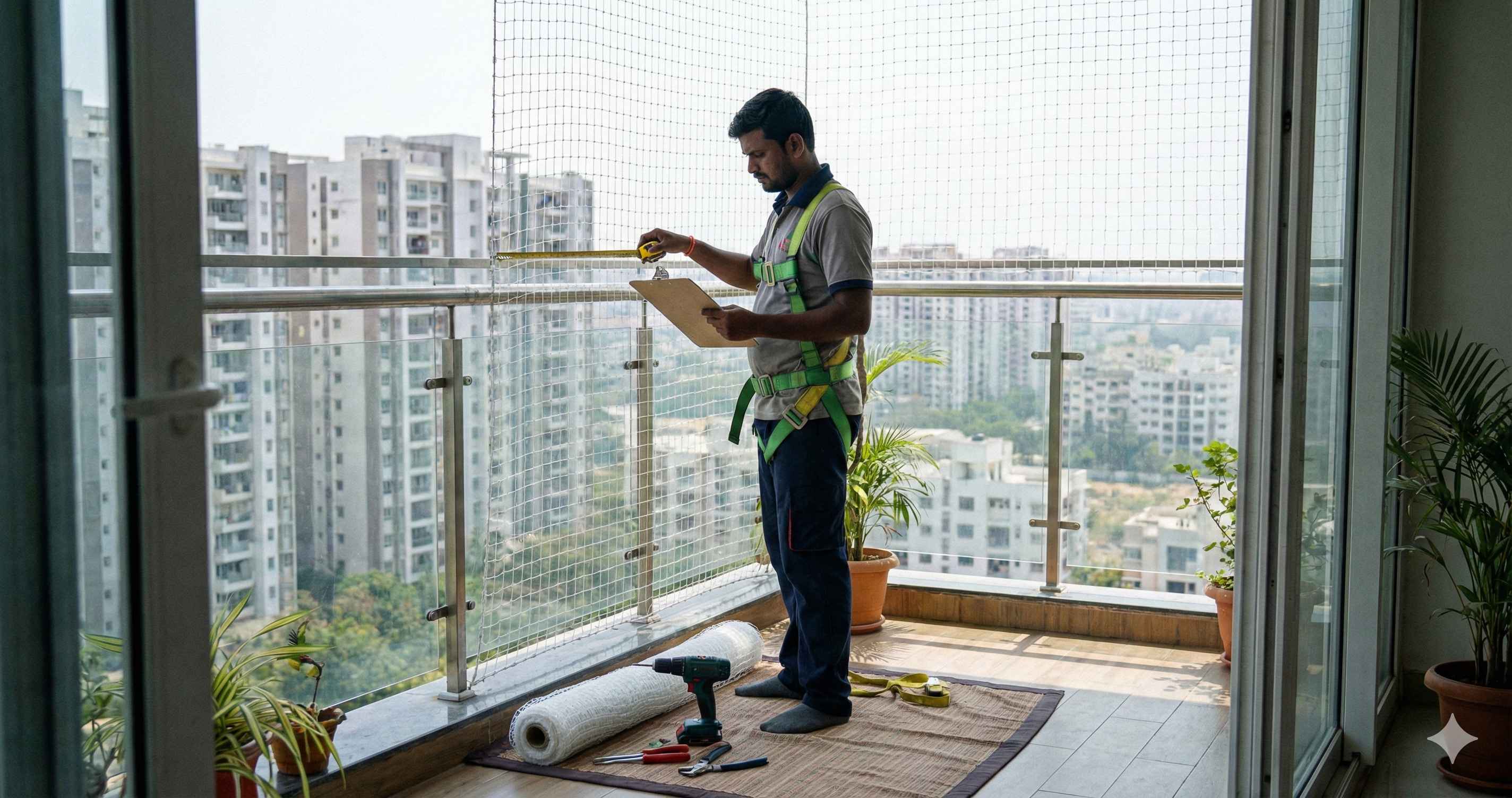
5 Warning Signs Your Safety Nets Need Immediate Replacement
Critical warning signs that your safety nets are failing. Learn when to replace safety nets to ensure continued protection for your family.
Safety nets don't last forever. Recognizing warning signs of deterioration can prevent accidents. This guide helps you identify when immediate replacement is necessary.
Why Safety Net Condition Matters
The Reality:
- Safety nets degrade over time
- Environmental exposure accelerates wear
- Hidden damage can compromise safety
- Regular replacement is normal and expected
- Failure can have catastrophic consequences
Typical Lifespan:
- Standard HDPE nets: 5-7 years
- Premium UV-stabilized nets: 7-10 years
- Harsh environments: 3-5 years
- Ideal conditions: Up to 10 years
After this period, replacement should be considered even without visible damage.
Warning Sign #1: Visible UV Degradation
What to Look For:
Color Changes: ❌ White nets yellowing or browning ❌ Any net discoloration ❌ Fading from original color ❌ Inconsistent coloring across net ❌ Chalky or powdery appearance
Texture Changes: ❌ Brittle or stiff feel (should be slightly flexible) ❌ Cracking when folded ❌ Powdery residue when touched ❌ Rough texture (was smooth originally) ❌ Stretching doesn't return to original shape
Why It Matters: UV degradation means the material structure is breaking down at molecular level. Strength is significantly compromised even if net looks intact.
Immediate Action Required: Once UV degradation is visible, the net has lost substantial strength. Plan for replacement within 30-60 days maximum.
Cost of Delay:
- Risk of sudden failure
- Complete net failure possible
- Potential accident liability
- Emergency replacement more expensive
Prevention:
- Use UV-stabilized nets from start
- Regular inspection every 3-6 months
- Professional assessment annually
- Replace proactively based on age
Warning Sign #2: Physical Damage to Netting
Critical Damage Types:
Tears and Holes: ❌ Any tear larger than 10mm ❌ Multiple small holes ❌ Holes near attachment points ❌ Tears at stress points (corners) ❌ Spreading damage from initial small hole
Fraying: ❌ Unraveling strands ❌ Exposed core materials ❌ Loose threads throughout ❌ Thinning of net material ❌ Mesh opening enlarging
Mesh Deformation: ❌ Stretched openings (mesh size increased) ❌ Sagging between attachment points ❌ Permanent deformation after stress ❌ Uneven mesh sizes across net ❌ Loss of original shape
What Causes Physical Damage:
- Bird claws and beaks
- Pet scratching or biting
- Sharp objects contact
- Storm damage (wind, hail)
- Normal wear and tear
- Poor quality materials
Assessment: Minor damage: Single small tear (under 10mm), repairable Moderate damage: Multiple small tears or one large tear, consider replacement Severe damage: Multiple large tears, extensive fraying, immediate replacement
Repair vs Replace:
- Small isolated damage: Repair possible
- Any damage compromising large area: Replace
- Any damage near edges or attachments: Replace
- Multiple repair areas: Replace entire net
- Age over 5 years + any damage: Replace
Timeline:
- Severe damage: Replace within 1-2 weeks
- Moderate damage: Replace within 1-2 months
- Minor damage: Monitor closely, repair or replace within 3 months
Warning Sign #3: Compromised Attachment Points
What to Inspect:
Mounting Hardware: ❌ Rusted hooks or brackets ❌ Loose mounting screws ❌ Cracked plastic components ❌ Bent hooks or fasteners ❌ Corrosion around fittings
Net Attachment: ❌ Fraying at attachment points ❌ Torn areas where net attaches ❌ Loose connections ❌ Missing attachment points ❌ Stretched holes around fasteners
Tension Issues: ❌ Sagging despite proper installation ❌ Cannot be retensioned ❌ Different tension across net ❌ Pulling away from attachment points ❌ Visible stress marks at connections
Why Attachments Matter: A net is only as strong as its weakest attachment. Failure at even one point can cause progressive unzipping and complete detachment.
Inspection Method:
- Visually inspect every attachment point
- Gently tug at each connection
- Look for rust, corrosion, or wear
- Check wall/railing attachment integrity
- Verify uniform tension
- Test with moderate pressure (not full weight!)
Immediate Concerns:
- Any loose attachment
- Multiple corroded attachments
- Structural concern at mounting surface
- Previous attachment failures
Action Required:
- Minor issues: Professional retightening/replacement of hardware
- Multiple attachment problems: Full replacement likely needed
- Structural concerns: May need wall/railing repairs first
- Age over 7 years + attachment issues: Complete replacement
Cost:
- Hardware replacement only: ₹1,000-3,000
- Reinstallation with new hardware: ₹2,000-5,000
- Complete net replacement: ₹5,000-20,000 depending on size
Warning Sign #4: Loss of Tensile Strength
How to Identify:
Visual Sagging: ❌ Net hangs loosely between attachments ❌ Cannot be tensioned properly ❌ Deepening sag over time ❌ Wavy appearance instead of taut ❌ Collects water or debris due to sagging
Touch Test: ❌ Net feels stretchy or elastic (should be firm) ❌ Doesn't bounce back after pulling ❌ Feels weak or flimsy ❌ Easily deformed by hand pressure ❌ Different strength in different sections
Load Test (DO NOT Attempt with Person/Child): ❌ Fails sandbag test ❌ Excessive stretching under moderate weight ❌ Permanent deformation after load ❌ Sounds of strain under normal test load
Scientific Explanation: Polymer chains in HDPE/Nylon break down over time due to:
- UV exposure (photooxidation)
- Temperature cycles
- Moisture
- Mechanical stress
- Chemical exposure (pollution, bird droppings)
Result: Material appears intact but has lost load-bearing capacity.
This is the Most Dangerous Failure Mode:
- Net looks fine
- No visible damage
- But catastrophically fails under load
- No warning before failure
Professional Testing: Annual professional inspection includes:
- Tensile strength testing
- Load simulation
- Material integrity assessment
- Recommendation for replacement timing
Red Flag: If net is over 5 years old and showing ANY signs of strength loss, immediate replacement is prudent.
Timeline:
- Obvious strength loss: Replace immediately
- Subtle strength loss + age: Replace within 30 days
- Professional assessment shows reduced strength: Follow expert recommendation
- Net age over 7 years: Replace proactively regardless
Warning Sign #5: Age and Environmental Exposure
When Age Becomes Primary Factor:
Standard Lifespan Exceeded: ❌ HDPE nets over 7 years old ❌ Nylon nets over 10 years old ❌ Any net approaching or exceeding manufacturer recommendations ❌ No documentation of installation date (assume worst case) ❌ Previous generation materials (older installation)
High-Exposure Environments: Multiply risk if located in: ❌ Coastal areas (salt corrosion) ❌ High-pollution cities (chemical damage) ❌ Direct sun exposure (UV damage accelerated) ❌ Extreme temperature variations ❌ High-wind areas (mechanical stress)
Accelerated Aging Indicators:
- Originally premium net now showing wear
- Faster degradation than expected
- Environmental conditions harsh
- Heavy bird activity (dropping acidity)
- Pet clawing/contact
Proactive Replacement Philosophy: Rather than waiting for obvious failure, replace based on:
- Time in service (5-7 years for most)
- Environmental exposure level
- Consequences of failure (children, high floors)
- Peace of mind
Risk Assessment: Low Risk (okay to use to end of lifespan):
- Ground floor installation
- No children or pets
- Excellent condition
- Protective environment
- Regular professional maintenance
High Risk (replace proactively):
- High-rise installation (4+ floors)
- Young children or pets
- Harsh environment
- Any visible degradation
- Past manufacturer lifespan
When Multiple Warning Signs Present:
If you observe 2+ warning signs: 🚨 Immediate replacement required 🚨 Do not delay 🚨 Consider temporary restriction of balcony access 🚨 Emergency professional consultation
If you observe 1 warning sign: ⚠️ Detailed professional inspection within 1 week ⚠️ Likely replacement within 1-3 months ⚠️ Increased monitoring frequency ⚠️ Prepare for replacement budgeting
The Replacement Decision
Cost-Benefit Analysis:
Cost of Replacement:
- Small balcony: ₹5,000-10,000
- Medium balcony: ₹8,000-15,000
- Large balcony: ₹15,000-30,000
Cost of NOT Replacing:
- Child injury medical costs: ₹2,00,000-50,00,000+
- Legal liability: ₹5,00,000-50,00,000+
- Emotional trauma: Priceless
- Guilt and regret: Immeasurable
Clear Answer: Proactive replacement is always cheaper than consequences of failure.
When to Replace Immediately (Do Not Delay):
✓ Any severe damage observed ✓ Significant strength loss detected ✓ Multiple attachment failures ✓ Net age exceeds 7 years with any degradation ✓ Professional assessment recommends replacement ✓ Multiple warning signs present ✓ High-stakes situation (young children, high floor) ✓ Peace of mind compromised
How to Choose Replacement Nets
Learn from Experience:
Evaluate Current Net:
- What failed prematurely?
- What environmental factors present?
- Was quality adequate?
- Is upgrade warranted?
Choose Better: ✓ Invest in UV-stabilized premium nets ✓ Select appropriate material for environment ✓ Choose certified brands (Garware, Tuff Safe) ✓ Opt for professional installation ✓ Consider longer-lasting alternatives (invisible grills)
Material Selection:
- Standard environment: Premium HDPE
- Harsh environment: Nylon or UV-enhanced
- Coastal areas: Maximum UV protection, stainless steel fittings
- Long-term thinking: Consider invisible grills (15-20 year lifespan)
Investment Perspective:
- Premium nets cost 30-40% more
- Last 40-50% longer
- Better ROI long-term
- Greater peace of mind
The Replacement Process
Step 1: Schedule Professional Inspection Get expert assessment of current condition and recommendations.
Step 2: Choose Quality Replacement Select appropriate material for your environment and needs.
Step 3: Schedule Installation Professional installation ensures proper setup.
Step 4: Remove Old Net Complete removal of deteriorated netting.
Step 5: Inspect Mounting Points Repair or replace hardware as needed.
Step 6: Install New Net Proper tensioning and complete coverage.
Step 7: Testing Verify all attachment points and proper installation.
Step 8: Documentation Record installation date for future maintenance planning.
Step 9: Maintenance Schedule Set calendar reminders for regular inspections.
Typical Timeline: 1-2 days for standard residential installation
Maintenance to Extend Lifespan
Proactive Care:
Monthly: ✓ Visual inspection ✓ Remove debris ✓ Check attachments ✓ Clean bird droppings (acidic)
Quarterly: ✓ Detailed inspection ✓ Photo documentation ✓ Check for UV damage ✓ Clean thoroughly
Annually: ✓ Professional inspection ✓ Tensile strength assessment ✓ Hardware check and replacement if needed ✓ Plan for future replacement
Documentation:
- Keep installation records
- Note inspection findings
- Photo track condition
- Plan replacement budgeting
Regional Considerations
Hyderabad:
- Hot sun accelerates UV damage
- Pollution factor significant
- Expected lifespan: 5-6 years standard, 7-8 years premium
- Replacement cost: ₹6,000-15,000 typical balcony
Bangalore:
- Moderate climate extends lifespan
- Less UV stress
- Expected lifespan: 6-7 years standard, 8-10 years premium
- Replacement cost: ₹7,000-18,000 typical balcony
Vijayawada & Visakhapatnam:
- Coastal humidity and salt
- UV exposure high
- Expected lifespan: 4-6 years standard, 6-8 years premium
- Replacement cost: ₹5,000-14,000 typical balcony
Get Professional Assessment
Satya Safety Nets offers:
- Free safety net condition assessment
- Expert replacement recommendations
- Quality replacement nets (certified materials)
- Professional installation
- Warranty on new installations
- Service across Vijayawada, Visakhapatnam, Hyderabad, Bangalore
- Emergency replacement services
- Annual maintenance contracts
Don't wait for failure. If you've noticed any warning signs, schedule a professional inspection today.
Remember: Safety nets save lives, but only when they're in good condition. Proactive replacement is investing in your family's safety. When in doubt, replace. The cost of replacement is minimal compared to the protection it provides.